|
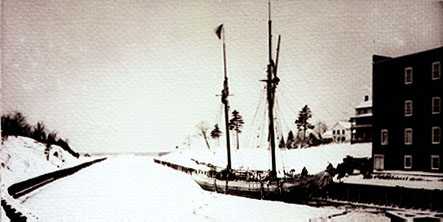
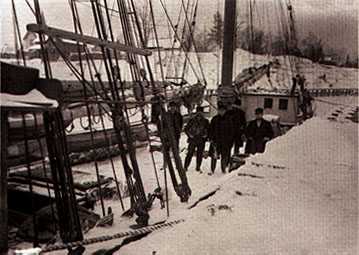
SEA GEM The "SEA GEM" in the lower channel, tied up at the Roller Mill dock for the winter. The constantly moving currents of water precluded damage to the ship by crushing ice.
SEA GEM
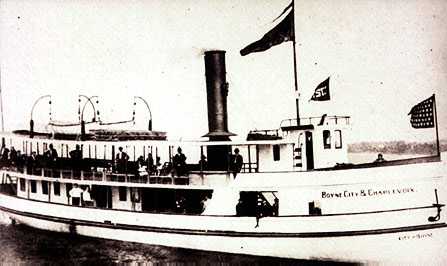
CITY OF BOYNE The "CITY OF BOYNE" made two round trips between Boyne City and Charlevoix during the late nineties and for several years into the Twentieth century.
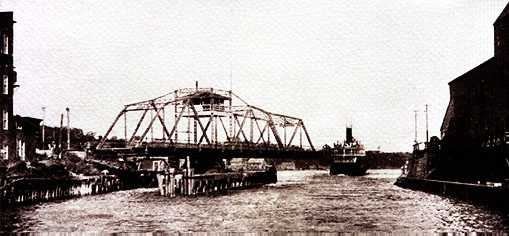
NEW SWING BRIDGE The new swing bridge had been in operation for only a short time when it was discovered there had been a slight oversight or miscalculation in allowing for the expansion of the stell in hot weather. This minor oversight had, at times, major consequences. The bridge expanded with a vengeance during a hot spell, sometimes to the point where it could not be opened until the steel cooled. This was especially irritating to the captains of large steamers. Smaller craft had no trouble, for most of them could pass under the bridge. The clearance was several feet greater than it is on the present bascule type bridge. Also, the cruisers then had no ego-inflating antennas that transformed little men into big men. At one time the "MISSOURI" was kept from entering the harbor for more than an hour while the fire department poured water on the hot steel in an effort to shrink it back to the point where the bridge could open. And all this while the captain of the "MISSOURI," every few minutes, would give several short blasts of the boat's whistle, as though that did anything but make hot tempers hotter. Innumerable power failures of that era gave the city fathers great concern, for a fire on the north side at one of these times could very easily get out of control. Fortunately no serious fires occurred during one of these crises.
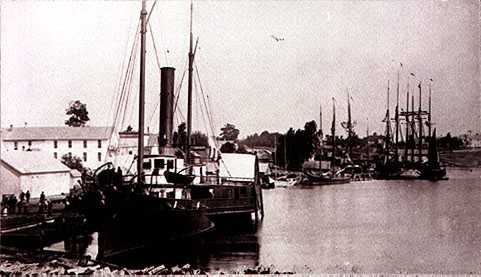
THE "ANDREW JOHNSON" FINALLY MAKES PORT For many years the government ship "ANDREW JOHNSON" found it necessary whenever she stopped at Charlevoix, to dock at the north pier of the channel just west of the bridge, for she was too wide to pass through. A government ship being thus denied use of the nearby harbor was cause for a study of the problem for future shipping. It was found that much larger ships were appearing on the Great Lakes in increasing numbers. The inadequacy of the old bridge and the urgent need for greater width in the passageway of the channel became fully apparent. So, in the year 1901, a new steel swing bridge of much greater span replaced the old. After figuratively waiting for fifteen years in the vestibule the "ANDREW JOHNSON" was allowed to come into the parlor. With the new bridge the gates of commerce were opened wide to the ships of all sizes on the lakes. The golden days of the Inland Seas were close at hand. (In the above picture the "ANDREW JOHNSON" is seen docked in Round Lake between Antrim Street and Mason Street. A Mackinaw boat and several two- and three-masted schooners can be seen in the background.) |